
|
BLOG
brenden kellwy law NEWS
Insightful Legal Perspectives for Ohio Residents
|
Tender, Strong, and True: Irish Heritage, Cleveland, and the People Who Keep Us Anchored
Brenden Kelley
March is Irish-American Heritage Month, and it always lands with me in a way that is hard to explain unless you have lived it. My Irishness is not subtle. Between the name (Brenden Patrick Kelley) and the fair skin, freckles, and the brown-and-red beard, I wear it on my sleeve. It gives me away before I even say a word.
But what matters more is what it has shaped in me: a sense of belonging, a love of story, and a belief that faith is something you live, not something you perform.
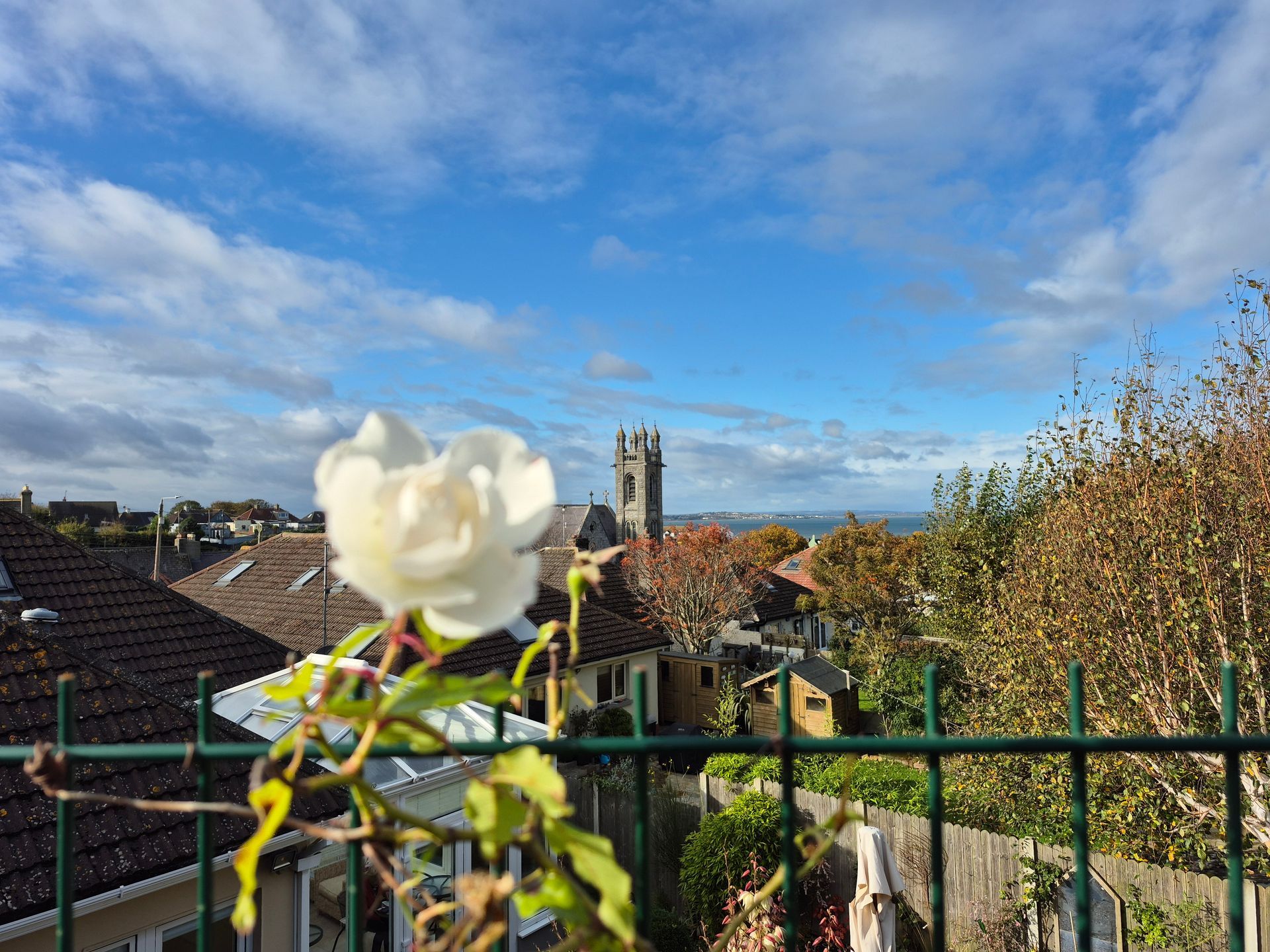
I had the chance to visit Ireland in October 2025, and it deepened that feeling. There is a groundedness there that I cannot quite put into a neat sentence, equal parts grit and warmth. It reminded me that resilience is not just pushing through. It is staying connected to what is true, staying close to your people, and coming back to your values when life gets loud.
Cleveland’s Irish story is bigger than the parade, but the parade matters
Cleveland’s Irish roots run deep. In the 1800s, Irish immigrants and refugees built lives here with hard work, faith, and a community that had to look out for its own. One of the best known examples is Irishtown Bend, a neighborhood perched above the Cuyahoga River that became home to generations of Irish immigrants.
If you know anything about Irish-American history, you also know the darker side of it: the suspicion, the stereotypes, the nativism, the “outsider” label that followed Irish Catholics in particular. Even the phrase “No Irish Need Apply” has its own complicated history. Some historians have argued it was overstated, while more recent research has documented real examples of it appearing in print and in hiring contexts, enough to confirm it was not purely a myth.
I did not live that struggle. I did not earn that hardship firsthand. But I benefit from what that generation built anyway: the neighborhoods, the parishes, the networks, the sense of “we.” Cleveland’s Irish community did what immigrant communities often do when the world is uncertain: they created their own support systems so their families could survive and then thrive. Irishtown Bend’s history is one local snapshot of that broader story.
And that is why, even if it is not the whole story, the St. Patrick’s Day parade still matters.
Cleveland’s parade traces back to the 1840s, and the tradition has been sustained and organized for generations through the United Irish Societies. It is not just a party. It is a public way of saying: we are still here, we belong, and we are proud of what we carry.
The memory I did not understand as a kid, but feel now as an adult
When I was a kid, my dad used to pull me out of school for the St. Patrick’s Day parade.
It was always the same routine. A “doctor’s appointment.” A wink. And suddenly I was walking out of class while everyone else stayed behind. I loved it for the simplest reason: it felt like I had been let in on something special. Like Irishness meant I was part of a group with its own language and its own inside jokes. It felt like belonging.
I did not understand then what my dad was really giving me.
He was giving me time. He was giving me a story. He was giving me a tradition that said, “Remember who you are, and remember your people.”
This March marks twenty years since he passed in January 2006, which also means it has been twenty years since I last got pulled out of school with a fake appointment and a grin. There are some milestones you never expect to notice until you suddenly do.
My dad, Michael V. Kelley, was a Cleveland lawyer, a founding partner of Kelley & Ferraro, and someone who built his career as an advocate for people who did not have much power. He was also the son of a Cleveland firefighter, which is one of those details that says a lot about where he came from and what he valued.
So when I think about those parade days now, I see them differently. They were not just about being Irish. They were about being rooted.
Notre Dame as a kid, and why traditions matter more than we admit
Some of my earliest experiences of belonging to something bigger than myself came through Notre Dame. I still remember sitting in the back seat on the ride home from games, watching the highway lights pass by the car window, tired in the best way. And I remember the feeling inside the stadium: tens of thousands of Irish and Catholics, families and alumni, strangers who did not feel like strangers. For a few hours, you were part of one thing.
The tradition that stayed with me most was the Alma Mater after the game, win or lose. The team would turn. The students would sing. The crowd would stay. It was not just school spirit. It was something closer to a ritual. You were reminded, in real time, that you belonged to a story you did not create, and that your job was to carry it well.
This past year I got to sing the Alma Mater as a student. My wife was with me and she asked why it was such a big deal. The only honest answer I had was that traditions hold meaning. They tie us together in ways not many other things can.
I had the same conversation with her about Catholic Mass. Why the standing, sitting, kneeling, bowing, the repeated prayers, the rhythm of it all. In my view, it is humility before God, yes. But it is also something else: it binds people together beyond our own bubble. It gives you a shared language when life has no script. It turns belonging into something physical. You feel it in your body.
And when you connect that to Irish heritage, it makes sense. So much of Irish history is a story of holding on. Holding on to faith. Holding on to community. Holding on to identity when the world tries to make you forget it.
Notre Dame’s founding, and the Holy Cross fingerprint behind the rituals
What I did not understand as a kid, and appreciate more now, is that Notre Dame’s traditions are not random. They flow out of a particular origin story.
Notre Dame was founded in 1842 by Father Edward Sorin, a young priest of the Congregation of Holy Cross who came to northern Indiana with a small group and a vision that was bigger than their resources. They built in the cold, in uncertainty, and with the stubborn belief that education and faith belonged together. The school grew from a frontier mission into a place that, for generations of Irish Catholics in America, became a kind of spiritual home. Not because it was perfect, but because it was consistent about what it stood for.
That is the Holy Cross fingerprint I keep talking about. It shows up in the insistence that formation is not only intellectual, it is personal. It shows up in the idea that faith is not ornamental, it is lived. It shows up in the rhythm of the place. The Dome. The Grotto. The Alma Mater after games. The standing and sitting and kneeling of Mass. None of it is accidental. It is a way of training the heart to return, again and again, to what matters.
And when I connect that to Irish heritage, it makes sense. Irish Catholic life has always had a strong sense of ritual and community. Not as empty repetition, but as structure that holds you when life does not. That is what drew so many Irish families to places like Notre Dame in the first place. It was not just a school. It was a signal: you belong. Your faith belongs. Your story belongs.
And that is why, when the Alma Mater calls Notre Dame “Our Mother,” it does not feel like poetry. It feels like identity.
Notre Dame, “Our Mother,” and the line I cannot shake
Once you understand that the traditions have a source, the words “Our Mother” in the Alma Mater land differently.
It is easy to hear that phrase and think it is sentimental. But that is not how it feels when you have lived it. “Our Mother” is formation. It is a reminder that this place is meant to shape you, not flatter you. It calls you back to standards when your own standards start to slip. It reminds you that belonging is not just being welcomed. It is being asked to become worthy of what you belong to.
That is why a single line from the Alma Mater has stayed with me: “tender, strong, and true.” Not as a slogan, but as a test.
- Tender: How do I treat people when life is busy, when stress is high, when I feel stretched thin?
- Strong: What am I willing to carry, and what am I willing to do the hard way, the right way, when it would be easier to cut corners?
- True: Who am I when nobody is clapping? Who am I when it would be easier to perform than to be honest?
And here is what I have come to believe. Notre Dame is not perfect. The Irish are not perfect. My family is not perfect. I am not perfect. But a living tradition does not exist because it is flawless. It exists because it keeps calling people back. Back to community. Back to faith. Back to responsibility. Back to the better version of themselves, especially when life tries to pull them into something smaller.
Cleveland’s reminders, and what they are really for
Cleveland has visible reminders of Irish heritage, including places like the Irish Cultural Garden. I love that it exists, carved into the landscape as something worth honoring, not hiding. But the point is not the stone or the plaque. The point is what those reminders are trying to do to us.
They are meant to keep us connected. They are meant to keep us from forgetting the people who built what we now enjoy. They are meant to remind us that “we” is not just a word. It is something you protect and participate in.
That is also why the parade still matters. Not because a parade is the whole story, but because it is a public act of belonging. A way of saying: we are still here. We still carry each other. We still remember.
Heritage month, when it is done right, is not nostalgia. It is gratitude. It is remembering that people before us endured things we did not, built things we now take for granted, and held onto faith and community when it would have been easier to go numb. It is also a reminder that belonging is not something you hoard. It is something you build and then share.
What I hope we carry forward
And maybe that is the simplest lesson in all of this: the best parts of tradition are the parts that bring you back.
As we head toward St. Patrick’s Day, I keep coming back to the same quiet thought: I want to live in a way that honors what I have been given.
I’m not afraid to share it out loud. If we don’t, it disappears. Traditions survive because somebody is willing to carry them in public, to invite other people in, to say: this matters. The caution, at least the one Jesus gives us, is about motive: “Be careful not to practice your righteousness in front of others to be seen by them” (Matthew 6:1). At the same time, we’re also called not to hide the good: “Let your light shine before others” (Matthew 5:16). The line for me is simple: am I sharing this to be seen, or am I sharing it so something good gets remembered and passed on?
So here’s what I’m aiming for. To show up tender, strong, and true with the people I love. To stay connected to what matters when life gets loud. To remember that belonging is not something you hoard. It is something you build, protect, and share.
And maybe, if I am lucky, to pass down to the next generation something like what my dad gave me, a tradition that looks small on the surface, but becomes a compass over time.
Because that is what heritage is at its best.
Not a costume.
A direction.
One last note
If you’ve read this far, you’ve probably noticed this sounds different than my usual blog posts. Most of the time this space is for practical legal topics and plain-language guidance. But this month, and these memories, pulled something else out of me. I wrote with what I had.
So consider this a small detour, and maybe a small introduction. If you’re used to seeing me only in the context of work, you’ve now gotten another view of me, where I came from, and what I’m trying to carry forward.